Ready to Launch Your Travel Platform?
Join 150+ travel businesses already managing bookings, distribution, and accounting with TourX. Configure your package and get custom pricing tailored to your operations.

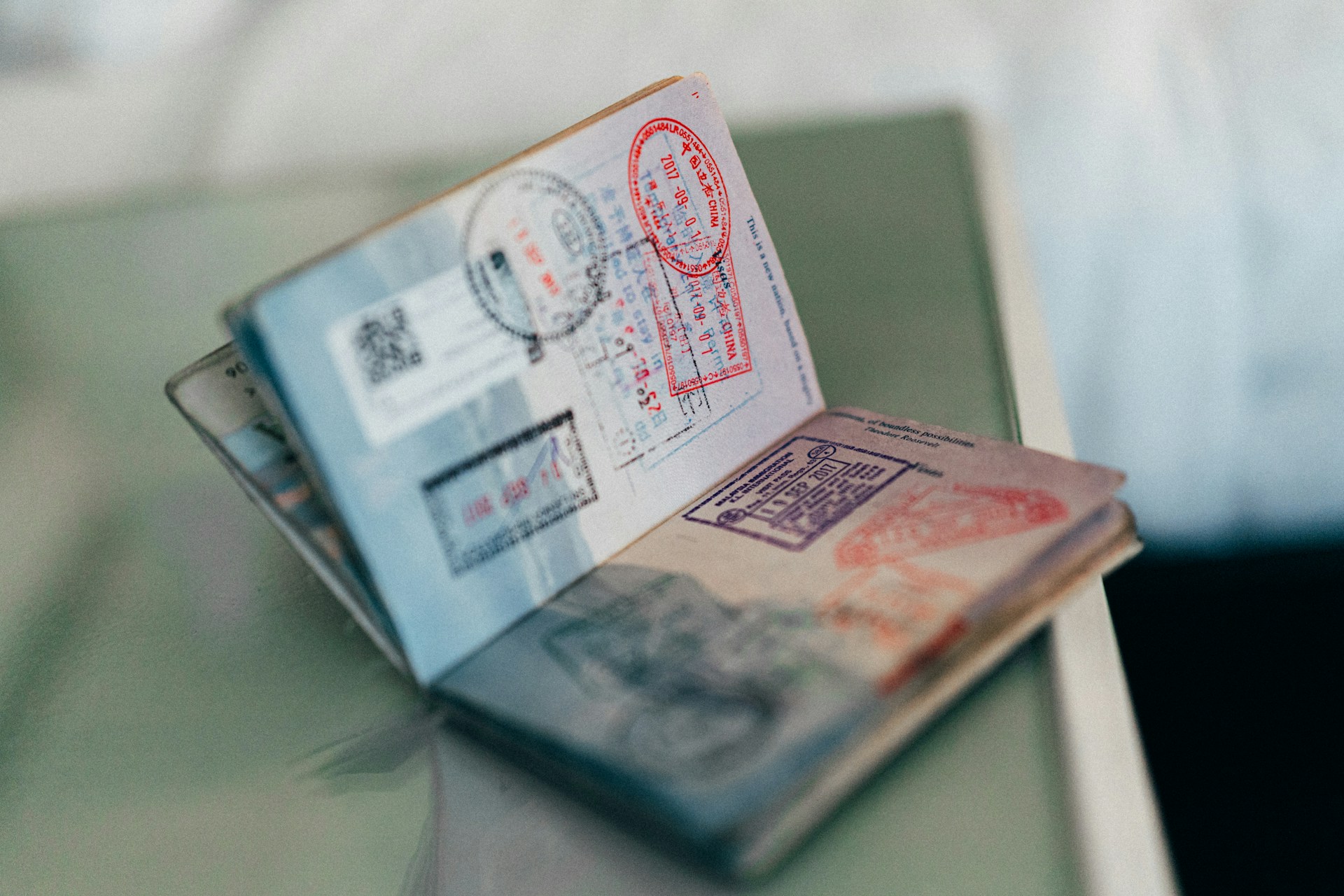
A travel agent in Manchester triple-checks her client’s Schengen application. Passport validity, good. Flight itinerary, uploaded. Hotel confirmation, attached. Insurance certificate, perfect dates.
Rejected.
The insurance policy listed the traveler’s middle name. The passport didn’t. A single field mismatch, invisible to the human eye during a busy Wednesday afternoon, caught instantly by an automated screening system that cross-references every document against every other document in the file.
This isn’t a hypothetical. It’s a Tuesday in April 2026.
The visa compliance landscape has become the most complex in the history of modern travel. Timatic, the airline industry’s document verification backbone, now processes roughly 70 rule updates per day across the world’s entry requirements. Meanwhile, three major new systems have launched or are launching simultaneously, each adding new layers of obligation for travelers who previously needed nothing more than a valid passport and a boarding pass.
Travel agents, the people standing between excited vacationers and bureaucratic catastrophe, are bearing the weight of all of it.
On April 10, 2026, the EU’s Entry/Exit System became fully operational across all 29 Schengen countries. The rollout had been phased since October 2025, but as of this week, every external border crossing in the Schengen Area is processing biometric data (fingerprints and facial images) for all non-EU nationals entering on short stays.
Passport stamps are gone. In their place: a digital record that tracks every entry, every exit, and every day of your 90-day allowance within any 180-day period. Overstays are no longer a matter of smudged ink and creative arithmetic. They’re permanently visible in a shared European database.
During the phased rollout alone, more than 52 million entries and exits were registered, with over 27,000 refusals of entry, including more than 700 individuals flagged as posing a security risk.
For travelers, this means longer processing times at their first border crossing (biometric enrollment takes several minutes), and a requirement to have documentation ready for questions about purpose of stay and accommodation. For travel agents, it means one more system to explain, one more anxiety to manage, and one more thing that can go wrong at the gate.
The European Travel Information and Authorisation System is confirmed for a Q4 2026 launch, though no exact date has been set. When it goes live, it will require travelers from 59 previously visa-exempt countries, including the United States, United Kingdom, Canada, and Australia, to obtain pre-travel authorization before entering the Schengen Area.
The fee has been raised from the originally proposed €7 to €20, a change confirmed by the European Commission in July 2025. Authorization is valid for three years or until the traveler’s passport expires, whichever comes first.
Here’s the nuance most coverage misses: ETIAS won’t become mandatory overnight. The EU has built in a transitional period of at least six months after launch, during which travelers will be encouraged but not required to have authorization. A further six-month grace period follows for first-time visitors. Full enforcement isn’t expected until mid-2027 at the earliest.
This sounds reassuring. It isn’t. The gap between “not yet mandatory” and “you’ll wish you had it” will be filled with confused travelers, cautious airlines, and agents who don’t know which version of the rules to communicate. The transitional period is where most of the damage will be done: not through enforcement, but through inconsistency.
The UK Electronic Travel Authorisation has been strictly enforced since February 25, 2026. Travelers from visa-exempt countries who don’t have an approved ETA cannot board transport to the United Kingdom. It costs £16 and is valid for two years.
Unlike ETIAS, there’s no grace period. The system is live and enforcement is immediate. Reports have surfaced of scanning app failures, delayed decision emails, and travelers stranded at departure gates because their ETA approval hadn’t come through in time.
For agents managing multi-destination European trips that include a UK leg, the ETA adds another requirement to track, another system to monitor, and another potential point of failure that falls squarely on their shoulders.
Beyond the headline systems, individual countries are tightening and digitizing their own requirements at an unprecedented pace.
Malaysia now requires a mandatory digital arrival card (MDAC) completed at least three days before arrival. Morocco has expanded AI-assisted document screening that flags blurred documents, edited photos, and mismatched personal data. The United States has enhanced social media vetting for visa applicants and introduced visa bonds ranging from $5,000 to $15,000 for certain nationalities. Multiple countries are switching to eVisa systems simultaneously, each with its own portal, its own processing quirks, and its own undocumented edge cases.
No single agent can track all of this manually. The volume of change has outpaced human capacity.
Ask most travelers why visa applications get rejected, and they’ll say “lack of ties to home country” or “insufficient funds.” Ask the agents processing the paperwork, and they’ll tell you the real killer: document inconsistency.
A Schengen visa application is a cross-reference exercise. Consulates don’t just read each document in isolation. They check whether every document tells the same story.
Flight dates don’t match hotel booking dates? Flag. Insurance coverage has a one-day gap between arrival and departure? Flag. The applicant’s name is spelled differently on their bank statement than on their passport (perhaps “Mohammed” versus “Mohamed”)? Flag. The applicant says “tourism” on the application but the cover letter mentions attending a conference? Category mismatch. Immediate flag.
Each of these is a real rejection scenario that agents encounter regularly. None of them reflect bad faith on the applicant’s part. They reflect the reality that assembling a visa application involves coordinating five to eight separate documents from different providers, and any friction between them, however minor, can trigger an automated or manual rejection.
The humans reviewing your application used to be the final filter. Increasingly, they’re the second filter. Morocco’s automated eVisa system already uses AI to flag blurred documents, edited photos, and data mismatches across submissions. Embassy-level screening in multiple countries now cross-references submitted documents digitally before a human examiner ever sees the file.
This isn’t inherently bad. Automation catches fraud more effectively. But it also catches innocent inconsistencies with the same severity, and there’s no “close enough” threshold in an automated system. The travel insurance that covers “John R. Smith” won’t match the passport issued to “John Robert Smith,” and the system doesn’t know the difference between a fraudulent alias and a form field that didn’t have room for a middle name.
These are the patterns agents see repeatedly, and the ones that can be prevented with systematic checking:
A hotel booking showing check-in on March 15 when the flight arrives March 16, even if the booking is correct and the traveler plans to arrive late. A bank statement showing a large deposit two days before the application, which looks like a manufactured balance rather than genuine financial stability. A passport expiring within the six-month validity window most countries require, meaning the application is dead on arrival before anyone reads a word of the cover letter. A tourist visa application from someone whose LinkedIn profile says they’re the regional sales director visiting a client. Because yes, consulates check LinkedIn now.
Each of these is preventable. None of them is obvious to a traveler assembling their own application.
Travel agents didn’t sign up to be immigration compliance officers. But that’s increasingly what the job requires. A significant share of an agent’s working day now goes to document compliance and travel regulation research, and that share is growing as the rules get more complex.
The cost of getting it wrong isn’t an administrative inconvenience. It’s a client denied boarding at the gate, a ruined vacation, a destroyed relationship, and a social media post that reaches a thousand potential future clients. One wrong piece of advice, or one missed regulatory update, and the agent loses not just a booking, but their reputation.
Here’s what an agent’s research workflow actually looks like in 2026: check the destination country’s government website (which may or may not be current). Check IATA’s Timatic database (the industry gold standard, but expensive and designed for airline check-in counters, not travel advisory). Check a WhatsApp group of fellow agents who trade tips about what embassies are actually asking for this week. Check a forum thread from 2024 that may or may not still be relevant. Call a supplier contact who heard something from someone.
Each of these sources operates on a different update cycle. Timatic might reflect a change within 24 hours. A government website might take a week. A WhatsApp tip might be wrong. The agent has to synthesize all of it, make a judgment call, and stake their professional credibility on the result.
For a single-destination trip with a straightforward nationality, this is manageable. For a multi-destination itinerary (four countries, three transit points, two passport holders with different nationalities), the complexity isn’t additive. It’s multiplicative.
Consider a client booking a trip through Istanbul, then Schengen (France and Italy), then the UK, then Morocco. That’s four different entry requirement sets. Transit visa rules for Istanbul. EES biometric enrollment at the first Schengen border. The 90/180-day calculation spanning both France and Italy. A UK ETA for the London leg. Morocco’s digital screening system and MDAC requirement.
Now imagine a family of four where one parent holds a different passport. The requirement matrix doubles.
Now imagine a group tour with twelve travelers from six nationalities.
This is not a solvable problem at the individual agent level. It’s a systems problem masquerading as a knowledge problem.
ETIAS, EES, and the UK ETA all apply to travelers who previously could enter with nothing but a passport. The mental model of “I don’t need a visa, so I’m fine” is becoming dangerous. By late 2026, a US citizen visiting Europe will need an ETIAS authorization, will go through EES biometric processing at the border, and will need a separate UK ETA if their trip includes Britain. Three new requirements for a traveler who previously needed zero.
The travelers who will be caught out aren’t the ones who regularly navigate visa processes. They’re the ones who’ve never had to think about travel documentation at all.
US visa appointments currently run 60 to 90 days as standard, stretching to 90 to 120 days from high-demand countries. Thousands of interviews were rescheduled from late 2025 to mid-2026 with minimal notice. Administrative processing, the catch-all category for additional review, can add weeks or months with no transparency about what’s being reviewed or when a decision will come.
Travelers who book flights before securing their visa are gambling. Travelers who book non-refundable flights before securing their visa are gambling badly. Agents who don’t explicitly warn clients about this timeline are assuming liability they can’t afford.
US consulates are reviewing social media profiles and LinkedIn pages as part of visa adjudication. This isn’t speculation. It’s documented policy. An applicant whose LinkedIn says “Business Development Manager” applying for a tourist visa raises questions. An applicant whose Instagram posts show them working from a café in Bali when their last visa was for “tourism” creates a pattern.
Social media privacy settings, profile descriptions, and even the timing of posts relative to previous travel can influence outcomes. Travelers who don’t realize their online presence is being evaluated can’t prepare for it, and agents who don’t advise clients on digital footprint hygiene are leaving risk on the table.
Just as software development has linters (tools that catch errors before code is deployed), visa applications need automated consistency checks. A system that cross-references passport details against flight dates against hotel bookings against insurance coverage against financial documentation, and flags every mismatch before the file reaches an embassy.
The technology to do this exists. The adoption doesn’t. Most agencies still rely on manual checklists and experienced-agent intuition, which works until it doesn’t, and when it doesn’t, the consequence isn’t a bug report; it’s a family stranded at an airport.
The current model asks agents to proactively seek out regulatory changes. That’s backwards. What agents need is a system that proactively tells them when something changes that affects their existing bookings.
Not “does this passport need a visa?” but “the transit visa rules for Country X changed yesterday, and you have three clients transiting through Country X next month.” Sherpa, a travel technology company, reports that their team is notified of an average of 55 policy changes per hour across global travel requirements. No individual agent can monitor that volume manually, and the expectation that they should is both unrealistic and unfair.
The travel industry is racing to build autonomous AI booking agents. But the data tells a different story about what travelers actually want. Only 2% of leisure travelers are willing to let AI book on their behalf without human oversight. The other 98% still want a person they trust in the loop.
This isn’t a rejection of technology. It’s a statement about where technology adds value. AI is extraordinarily good at compliance verification: checking dates, matching names, flagging gaps, monitoring regulatory feeds. Humans are extraordinarily good at judgment: understanding a client’s risk tolerance, navigating ambiguous situations, managing the emotional reality of travel disruption.
The winning model isn’t AI instead of agents. It’s AI handling the systematic, error-prone compliance work so agents can focus on the advisory, relational work that actually builds client loyalty.
None of this works if the underlying data is fragmented. Most agencies operate with bookings in one system, customer data in another, and communications in a third. Supplier information lives in emails. Regulatory knowledge lives in people’s heads.
AI tools can’t deliver value when they can’t access the information they need to operate. Agencies that invest in connecting their operational data now, integrating bookings, client profiles, itinerary details, and regulatory feeds into systems that can talk to each other, will be positioned to leverage AI compliance tools effectively. Agencies that don’t will find themselves locked out of the efficiency gains everyone else is capturing.
The visa compliance landscape of 2026 is the most complex it has ever been. EES is live. ETIAS is months away. The UK ETA is already catching people off guard. Country-level requirements are changing faster than any human can track.
Agents who treat document compliance as an afterthought, a box-ticking exercise squeezed between booking confirmations and itinerary tweaks, will lose clients to denied boardings and rejected applications. The trust that takes years to build evaporates in a single phone call from an airport gate agent.
Agents who invest in systematic compliance workflows, real-time regulatory monitoring, and pre-submission validation tools will turn this crisis into a competitive advantage. When the landscape is this complex, the agent who can guarantee their clients won’t be caught out isn’t just helpful. They’re indispensable.
The agents who thrive in 2026 won’t be the ones who memorize every rule. They’ll be the ones who build systems that make getting it wrong nearly impossible.
Sources consulted: IATA Timatic Solutions, European Commission Migration and Home Affairs, ABTA, France Diplomatie, Sherpa Travel Requirements, Skift Research, TrueVisaGuide, and multiple government immigration portals. All regulatory details current as of April 12, 2026.